
PID BOM
Upload P&ID drawings, get back a consolidated bill of materials
Problem
Building a bill of materials from a set of P&IDs is slow, manual work. Someone has to walk every sheet, pick out each line, valve, instrument & piece of equipment, then tally the lot into purchasing lists. Every company draws its P&IDs slightly differently, so generic tools fall over on real project drawings.
Approach
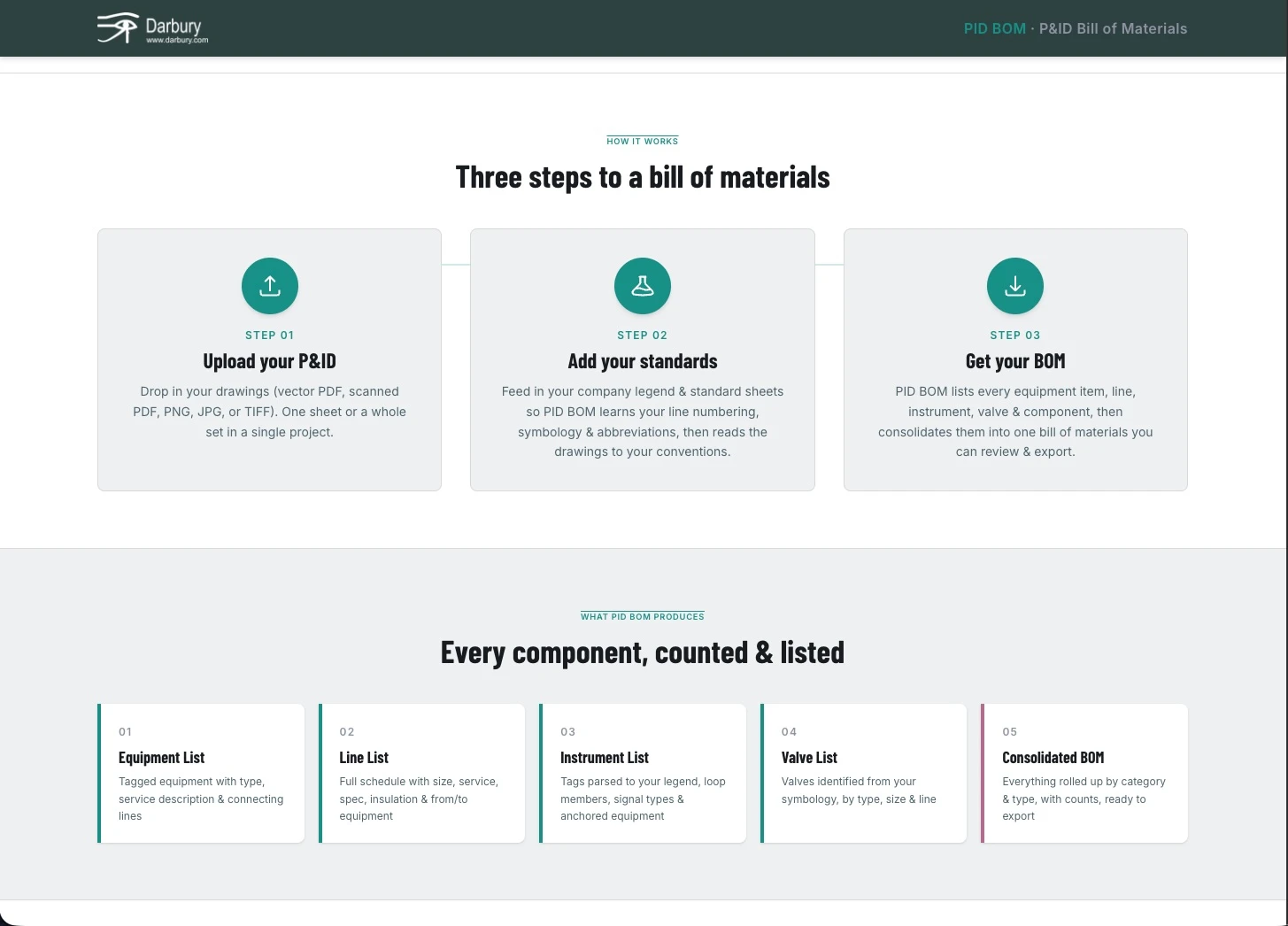
PID BOM builds on the reading engine developed for the P&ID Analyser: each uploaded PDF is rasterised, split into a grid of tiles & read through a three-layer extraction pipeline (vector extraction, AI vision & OCR fallback) before the results are reconciled into one picture of the sheet. The difference is what happens next. You feed in your company's legend & standard sheets so the app learns your symbology & line numbering convention, then it extracts every tagged component across the drawing set. A Raw Extraction view shows exactly what came off each sheet (tag, confidence, source layer & bounding box) so you can verify the reading before trusting the numbers.
Result
The extraction pipeline is running & inspection tooling is in place, with the consolidated BOM roll-up (legend ingestion, standards profiles & valve schedules) in active development. The goal is simple: drop in a drawing package, get back a purchasing-ready BOM instead of a week of manual take-off.
Tech Stack
Could this solve your problem?
If PID BOM sounds relevant to a challenge you're facing, I'd like to hear about it.
Get in Touch →